
Start a Helper Case Check with the Citation
Helper publishes police contacts and a court-payment route, but no public warrant lookup and no dedicated warrant desk. So lean on the case paper. The court name and case number on the citation tell you which clerk can actually confirm an outstanding warrant. For police-held records, contact the department; for non-emergency service, dispatch is the right line. County and state warrant searches can help, yet they lag behind court action and never replace the issuing court's word.
- Read the citation or court notice and note its court, case number, and next date.
- Call Helper Police at (435) 472-3719 for police-record or local routing questions.
- Contact the named court to ask whether an order is active and what step is required.
- Use CountySuite or Utah BCI SWW as additional name-search checks, not as a recall decision.
- Confirm any payment, appearance, or recall instruction with the issuing clerk.
Helper Police Has a Limited Public Office Window
Helper Police Department sits at 97 S Main, publishes (435) 472-3719, and takes email at police@helpercity.gov. The office window runs Monday through Thursday, 9 a.m. to 2 p.m. That window is small. Dispatch answers a separate line, (435) 637-0890, which is not the daytime office number. Helper posts no warrant-specific extension, no public roster, and no online status page. The Helper Police Department contact page carries the direct contact details. Before requesting copies, ask which agency holds the record you want; an officer can route paper but cannot change a court order.
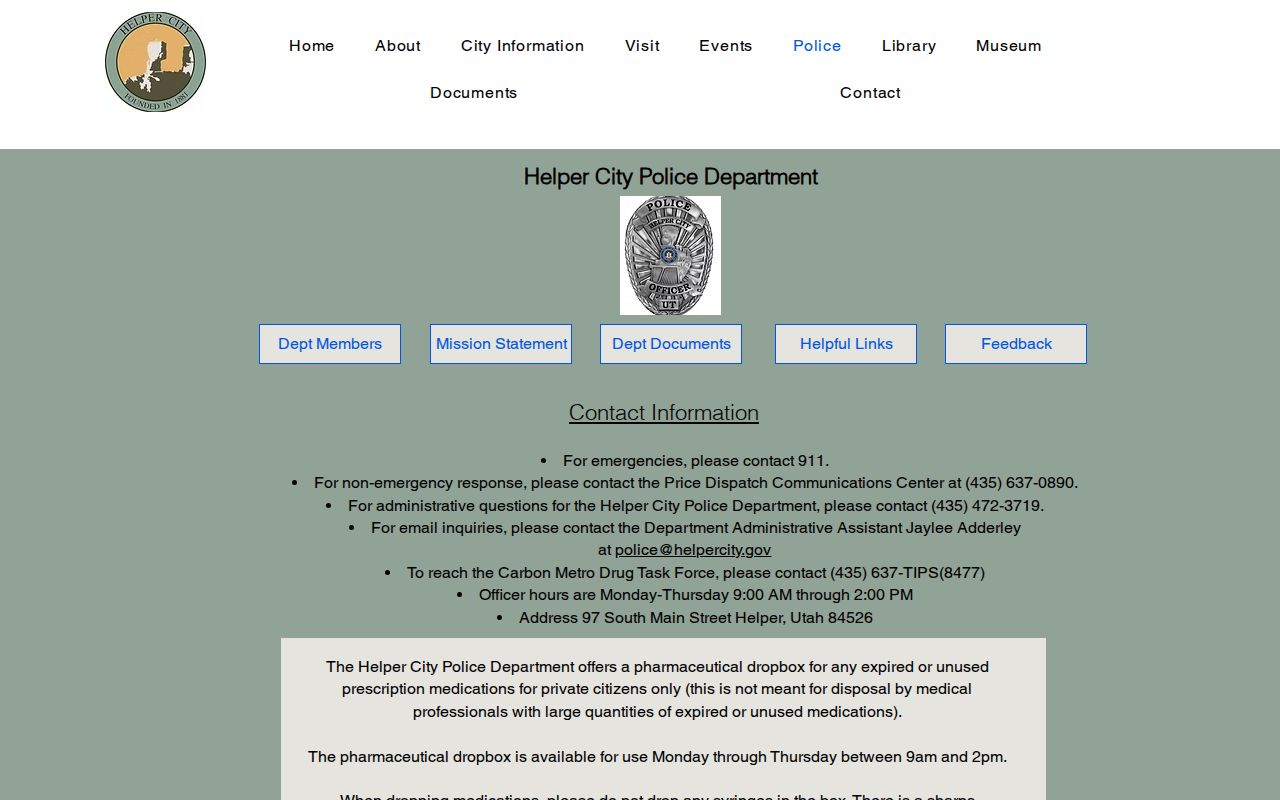
The department listing supports a local contact route, not a searchable warrant database.
The Helper Police Department and Municipal Court
Helper Police does police work and holds police records. The court keeps the case file, and only a court decides whether a warrant issues, stays active, or gets recalled. The city site offers an online "Pay Court Fines" route. That page says nothing about a warrant-specific field, whether a payment clears an order, or how to seek judicial review. Use the court name printed on the ticket rather than assuming every Helper citation belongs to a city court. The difference matters when the next step is a payment, a hearing, or a motion. Police can point you to a public contact, but they cannot stand in for the clerk's case status.
Helper City Hall Is a Separate Contact
Helper's city office sits at 58 S Main, reachable at (435) 472-5391. Note the addresses. That is not the police address at 97 S Main, and it is not county dispatch either. City hall fits questions about a city service, an ordinance record, or which department handles what, but treat it as a general line, not a warrant line. The Helper City website publishes these municipal contacts. When you request a record, say whether you want a police document, a court file, or a city administration paper, since the office may redirect you. A routing answer alone never tells you whether a judicial warrant is active.
City hall handles municipal administration; the court controls court-case status.
Court Orders That Can Grow Out of a Helper Case
A warrant tied to a Helper case grows out of a court case or a judicial finding in a criminal investigation. Miss a required appearance and a bench warrant may follow. Still, a ticket by itself proves nothing; confirm the court record and the current order before assuming an active warrant exists.
| Record route | Possible issue | Who confirms status |
|---|---|---|
| Traffic citation | Missed required court date or unresolved case | Court printed on the citation |
| City ordinance matter | Pending city proceeding, if filed in court | Named court clerk |
| Bench warrant | Judge's response to a missed appearance or other court event | Judge or clerk in the case |
| Arrest warrant | Separate probable-cause process | Issuing court or magistrate |
Helper's Fine Payment Page Does Not Explain Recall
Helper's "Pay Court Fines" link is just that, a payment route. The city's published information does not promise that paying a listed fine recalls a warrant, covers every court, or excuses a required appearance. Confirm first. Ask the clerk about the case, the balance, and any court instruction before sending money, and ask whether the case qualifies for payment, whether a hearing still stands, and whether a judge must address the warrant separately. Helper publishes no warrant bond table, no recall fee, no amnesty event, and no payment-plan rule. Do not borrow those terms from another city's payment page.
Before paying: verify the court and case number, then ask whether payment changes the warrant status or only the balance.
Helper's official site links its public court-fine payment route.
Read These Details on a Helper Case Record
Helper publishes no public warrant-record format to read. A search result can leave out fields the court uses internally, while a court file may hold a fuller case history than any name-search display. Match records by court and case number, and ask the clerk about any apparent mismatch.
| Person name | Use the spelling from the court paper; a name match alone is not confirmation. |
|---|---|
| Case number | Use the identifier assigned by the issuing court; no Helper warrant format was verified. |
| Issuing court | Read it from the citation or notice before contacting an office. |
| Charge or matter | Confirm the current case description with the clerk. |
| Order status | Ask whether issued, active, recalled, or otherwise resolved. |
| Payment or appearance | Request the exact next step and whether a hearing remains set. |
Helper's Small City Scale Does Not Mean One-Stop Records
Helper's 2020 population was 2,112. That count describes the city, not its volume of citations, cases, or warrants. The contacts stay split. Police, city hall, dispatch, and the courts remain separate offices even in a small municipality, and a city webpage will not carry a complete case history or one shared database. When you call, give the office the date, the citation number, and the named court if you have them. That detail helps staff route the question instead of assuming the city administration, the police agency, and the court share files.
From a Helper Court Case to County and State Searches
A Helper city contact is the first local stop, while a court case may be held by the city or Carbon County court named on the paper. CountySuite and Utah BCI SWW provide broader name-search context but do not supersede the issuing court. Helper police or court › Carbon County Sheriff/Jail for custody routing › Utah BCI SWW for a statewide check.
For countywide search limits and offices serving several communities, see the Carbon County warrant records overview and the county warrant search instructions. Those routes supplement the Helper case's court. They cannot replace its confirmation.
Why Helper Has No Verified Public Warrant List
Helper publishes no public warrant roster and no online warrant lookup. Its official pages give police contacts and a court-fines link, nothing more. That gap limits what you can see from home. It does not prove that no warrant exists. A portal for paying fines may not show the full docket either, and later judicial action can escape it entirely. When you need a real status answer, call the court named on the citation. If a search engine surfaces an old Helper city page, check its publication and contact details against the current official city site. Third-party summaries and county jail booking data are not a city warrant register.
Public-Record Limits for Helper Court Files
Utah's public-record rules open many government records to the public. Sealed files, juvenile matters, and other restricted information stay protected. Police records and judicial case files travel different request routes in Helper. A request can return a copy or a lawful denial, but it cannot change a warrant or make the court recall one.
Key Rules:
Utah GRAMA, Code §63G-2-201 governs public access to government records subject to statutory limits.
Utah Rule 4B addresses citations and possible bench-warrant action following a missed appearance.
Utah Rule 40 permits sealing of search-warrant materials in specified circumstances.
For a court-file copy, use the Utah Courts request process. For police records, ask Helper Police about its own route.
Ask for the Record from the Office That Holds It
Helper Police lists a department email and a public contact page. Helper City Hall keeps its own office number. Neither route answers questions about a case, a hearing, or a warrant order, so start with the court that holds the file. Describe the record you want and say whether it involves a police incident, city administration, or a court case. Copies of Utah court records are requested through the state court system. A county-held record follows the county's GRAMA process. These channels carry different access rules, fees, and response times. A clerk can explain how to check a case in Helper. Staff cannot give legal advice on what motion or defense to file. The Utah Courts court-record request information page describes the judicial-record route.